


[- お知らせ Notice - May 27th, 2026 ]
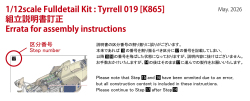
組立説明書に間違いがあることがわかりました。訂正点画像をUPしましたので、お手数ですが組み立ての際ご参照いただきますよう、お願い致します。
We have uploaded new images of the instructions for this kit as multiple errors have been found on the original set of instructions. For customers who have purchased this kit please refer to these new uploaded images for the Corrections to the instructions.
[ Tyrrell 019について -About the Tyrrell 019- ]

サーキットの路面にどれだけ距離を詰められるか。それがF1マシンの主たる議題の時代が長く続きました。より低く。それによって強く路面に押し付ける力、ダウンフォースを得るために-。
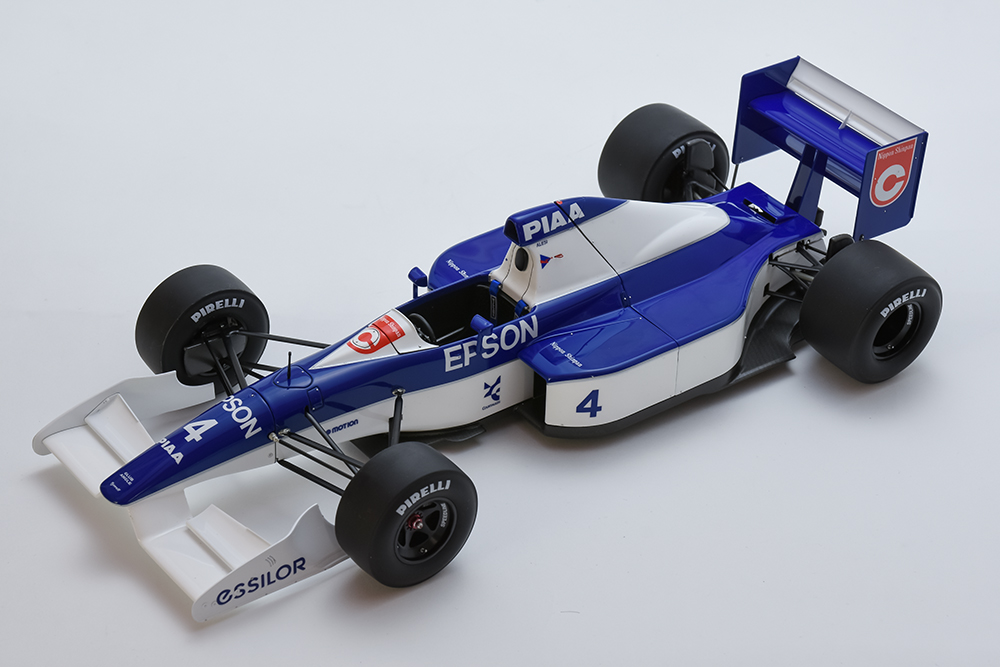
Tyrrell 019。その登場は、F1マシンの進化史において、ウイングの登場、グランドエフェクトの利用といった空力面の発明に並ぶ、革新的マシンとしてその名を残すことになるのです。
低く低く、が常識だった1980年代F1フラットボトム規制時代において、マシン前部を持ち上げて高速の気流を下部へ導くことによるダウンフォースの発生、そのことをマシンデザイナーたちは気づきはじめていました。その先鞭としては、ロリー・バーンによる80年代前半のトールマンでの様々なトライ、そしてF3000のいくつかのマシンでの実験的採用、さらに88年、エイドリアン・ニューウェイの手による、わずかに路面から距離を取り始めたノーズを持つ、March 881の登場が挙げられます。それらは、まさに空力革命の胎動といえるものでした。
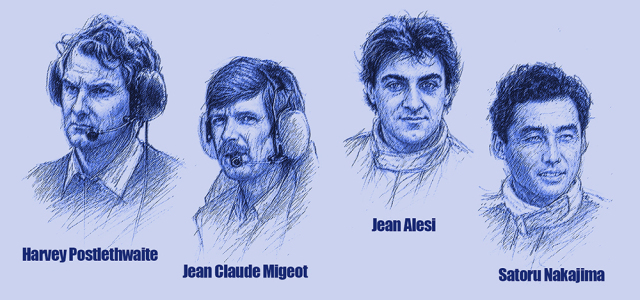
チーム・ティレルのチーフデザイナーのハーベイ・ポスルスウェイトと空力デザイナーのジャン=クロード・ミジョーは、オーナーのケン・ティレルの指揮の元、この考えを具現化します。それは、F1開発史に新たな1ページが書き加えられた瞬間でした。
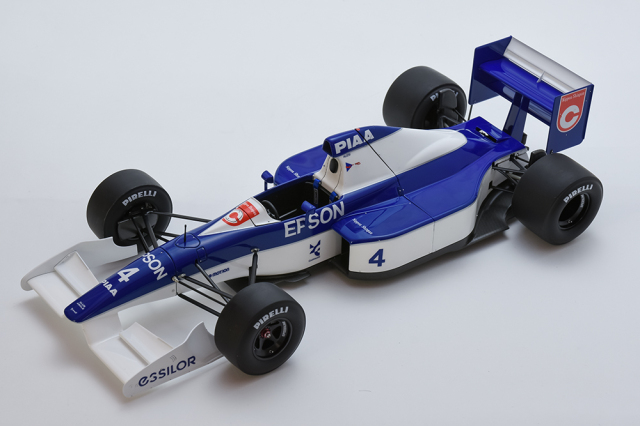
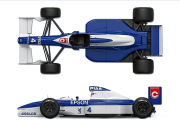
1990年、グランプリに登場したTyrrell 019は、高く持ち上げられたノーズ、その左右には下反角の翼 "アンヘドラルウイング"を持つ、誰も見たことのないシルエットを持つマシンでした。重力を拒むかのように高く掲げられたノーズとフロントウイングは、いうならば風という流体を切り裂くのではなく、整流という旋律へと変換する役目を担うものでした。
019は空力面の革新だけでなく、先代マシンである018から採用された左右でショックアブソ-バーとスプリングを共有する”モノショック”をフロントサスペンションに採用。エンジンはフォードDFVの進化型であるDFRを搭載していましたが、そのパワー不足を補うシャシーの性能から、マクラーレンやフェラーリ、ベネトンやウィリアムズといったライバル勢に肉薄する完成度を持っていました。
しかし、この"異形"のマシン019には、そこに生命を吹き込む最後のピースが必要でした。それが、若く荒削りだが速さに対しての強い渇望を秘めた新鋭、ジャン・アレジでした。
019を駆って上位陣に食い込む走りを見せたアレジは、モナコGPで2位に入り、一躍期待の新星として注目を集める存在になります。また、中嶋悟は、このマシンのシェイクダウン前から精力的にテストをこなし、マシンの完成度を上げるのに貢献、レースではイタリアGPと地元日本GPで6位に入る活躍を見せました。
019は、勝利という到達点には届きませんでしたが、F1マシン設計思想の系譜における分岐点となりました。それは、翌年以降ハイノーズが多くのチームに採用され、現代でもF1デザインのトレンドとして残り続けていることが証明しているのです。
Bringing the car down as close to the circuit track has always been the main topic of interest in Formula 1 - the closer the car runs to the ground a stronger downforce would be generated. The Tyrrell 019 was a machine that brought advancement to the development of aerodynamics to take advantage of such ground effects.
In the 1980s, due to regulations of flat bottom cars, designers realized that downforce could be achieved by lifting the front of the car to generate a high speed airflow through the base of the car. Various pioneers lead the development to take advantage of such aerodynamics: Designer Rory Byrne ran various trials during his time with Toleman motorsports in the early 80s, and various machine designs were tested in F3000. Adrian Newey would design the March 881 in 1988, which had a nose that was only slight off the ground. Under the direction of team owner Ken Tyrrell, chief designer Harvey Postlethwaite and aerodynamics designer Jean-Claude Migeot, Team Tyrrell would further advance the aerodynamics revolution with their new F1 car for the 1990 season.
The Tyrrell 019 debuted in 1990 with a design form never seen until then - a high nose and anhedral front wing design. With a high nose and wing places far from the ground, it acted to redirect airflow instead of cutting through it. The front suspension used a “mono shock” carried over from the previous 018, in which a single spring shock absorber is shared between both suspension arms. The engine was a Ford DFR engine, an evolution of the DFV. It was not the strongest engine at the time, and even paired with a revolutionary chassis the car preformed one step behind the other rival teams of McLaren, Ferrari, Benetton and Williams.
The final piece needed to breath life into such an unconventional machine was the talented newcomer Jean Alesi. Under his hands the 019 was able to go head to head against the competition and even managed to finish 2nd place during the Monaco GP, drawing attention to the young driver at the time. His teammate Nakajima Satoru also contributed to the machine's refinement during tests before the shakedown, and also managed to take 6th place with the car at both the Italian GP and his home race at Japanese GP.
While the 019 wasn't the forerunner on the track, it was one in regards to design philosophy for F1. The influence would be hard to ignore, as many teams would implement the design for the following year, and the design still continues to be a trend in F1 till this day.
[ キット概要 -Kit Details- ]
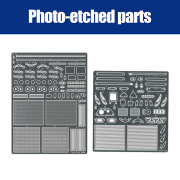
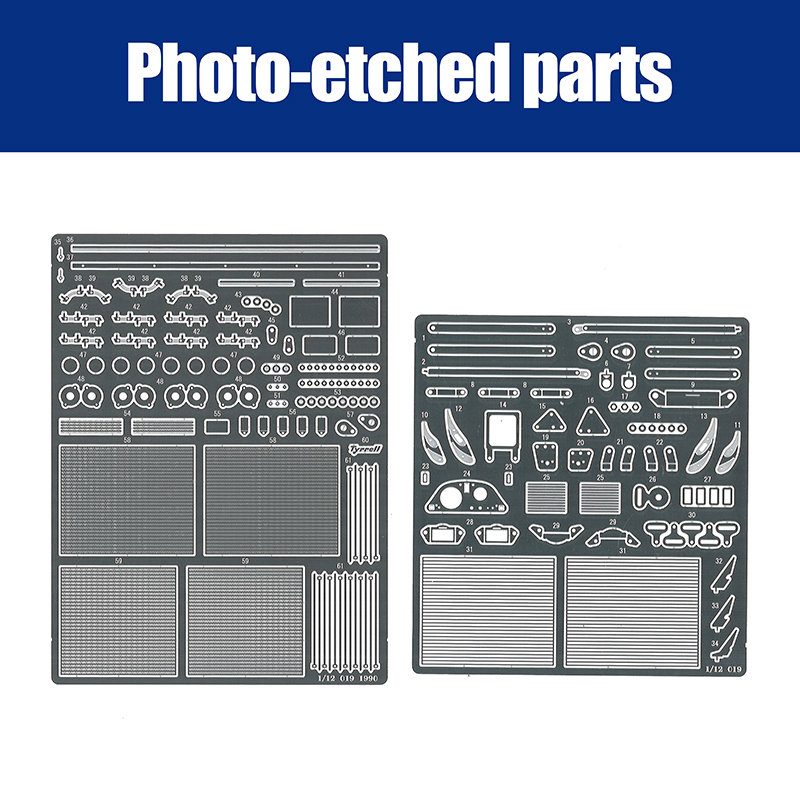
■レジン、ホワイトメタル、エッチング、シルクスクリーン印刷デカール、ゴムパーツ、アルミ挽き物、各種コード類等をふんだんに使用したマルチマテリアル・キットです。
■J.アレジが2位表彰台を獲得した1990年モナコGP仕様と、中嶋悟が地元日本で6位入賞を果たした日本GP仕様の選択式。
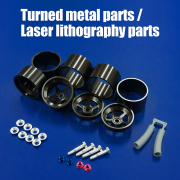
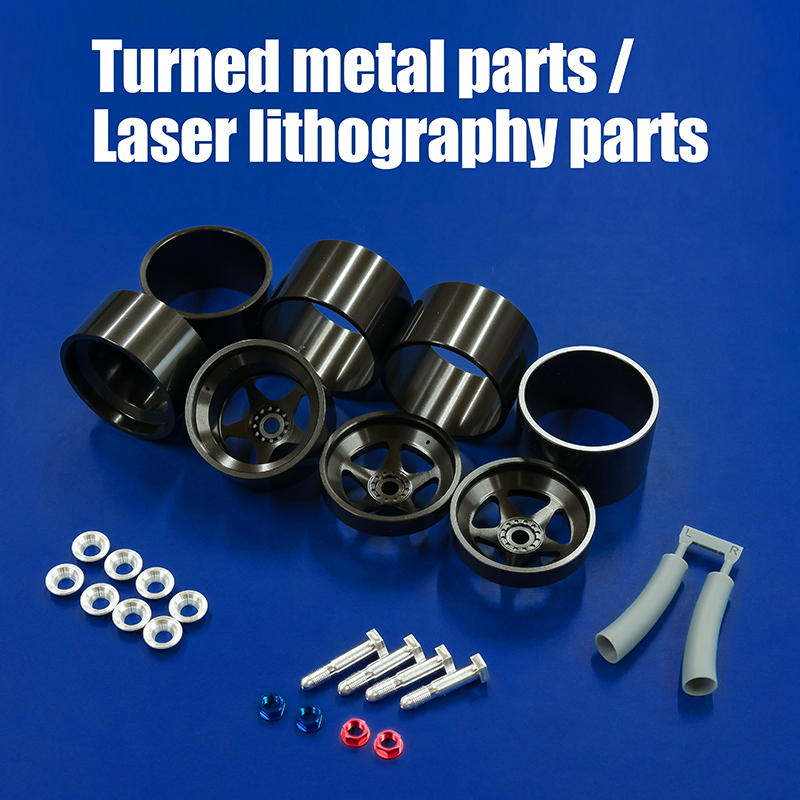
■ホイールとホイールロックナットはアルミ挽き物製でアルマイトカラー加工済。他にもエンジンファンネル、ホイールシャフトもアルミ挽き物製。
■各種パイピング、チューブ等、マルチマテリアルでパーツ化し、リアルさを追求しました。
■ボディカウルとノーズは車体から脱着が可能。完成後も内部構造を見ることができます。
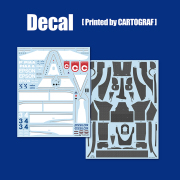
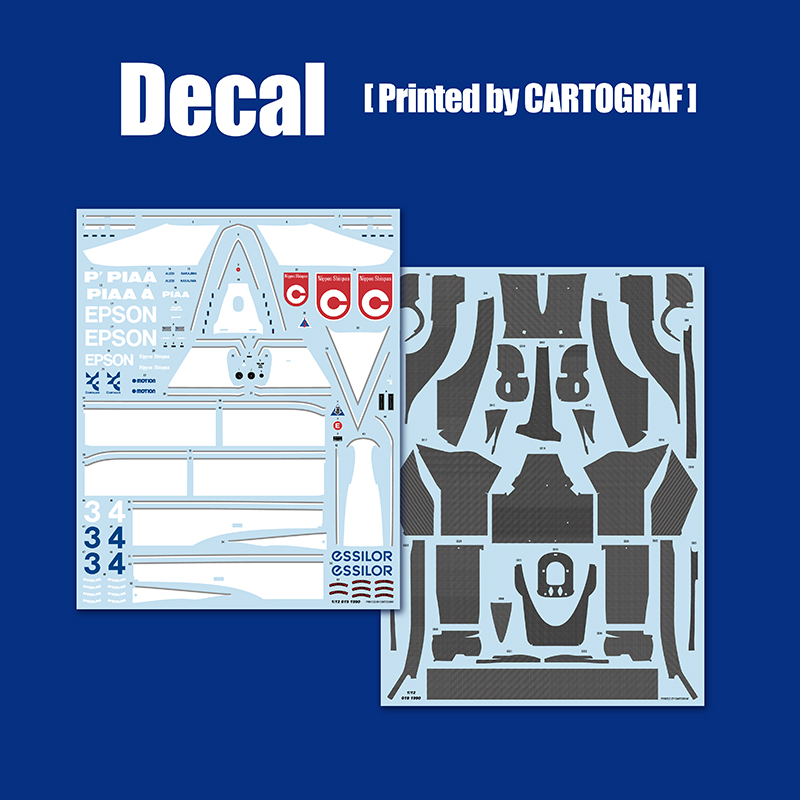
■スポンサーロゴデカールの他に、ウイング・モノコック等に使用するカーボンデカールを同梱。デカールはカルトグラフ製。
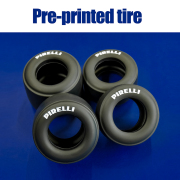
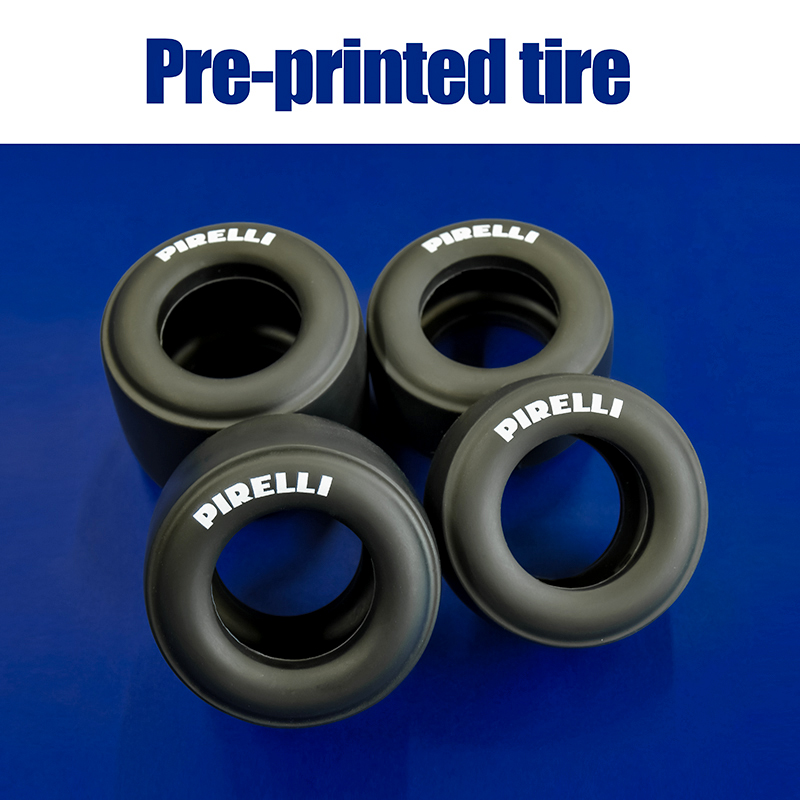
■ゴム製タイヤはメーカーロゴ印刷済。
- a full detailed, multi-material kit featuring white metal, resin, etching, turned parts, rubber tires, silk screen decals and various cords allowing for maximum representation of the original vehicle.
- Choose between the 1990 Monaco Grand Prix specification, where J. Alesi finished second place, and the 1990 Japanese Grand Prix specification, where S. Nakajima finished sixth on his home circuit.
- aluminum turned wheels and lock nut come dyed in color by anodizing. Other aluminum turned parts include engine funnel and wheel shaft.
- body cowl and nose can be removed after completion, allowing for full view of the detailed interior.
- decals mainly provided by Cartograf, including sponsor logos and carbon fiber patterns for areas around wing/monocoque.
- tires from pre-printed with maker logo.
[ パーツ・リスト -Parts List- ]
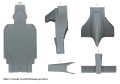
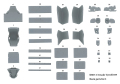
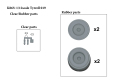
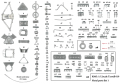
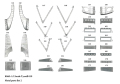
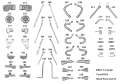
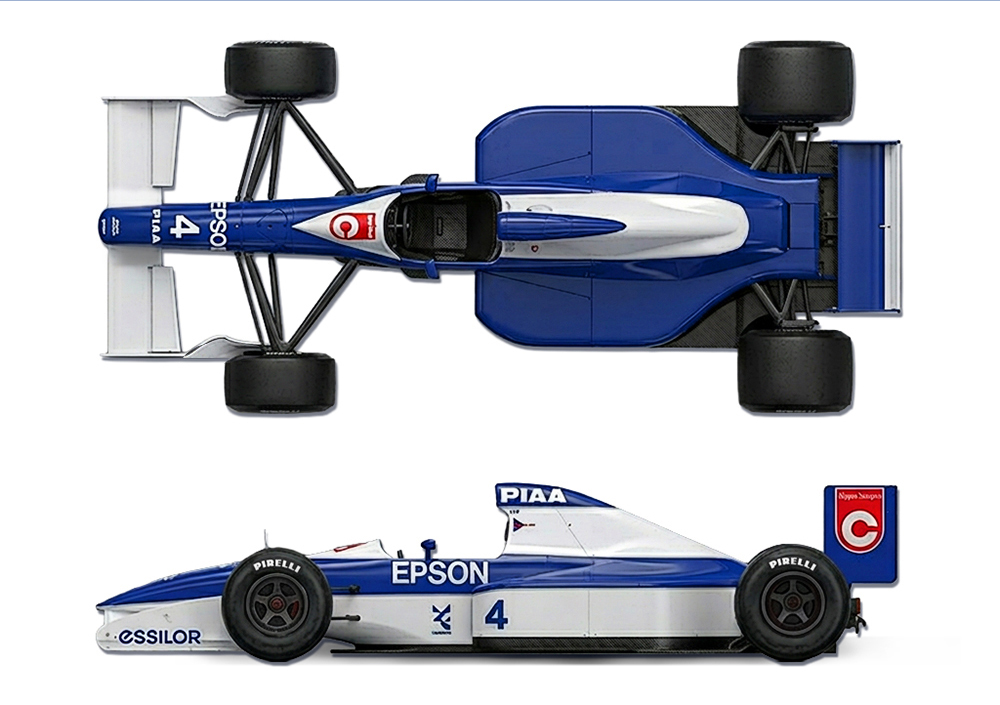
●K865 - 1/12scale Fulldetail Kit : Tyrrell 019
1990 Rd.4 Monaco GP #3 S.Nakajima / #4 J.Alesi
1990 Rd.15 Japanese GP #3 S.Nakajima / #4 J.Alesi
[ 2026年5月発売 / May 2026 released ]
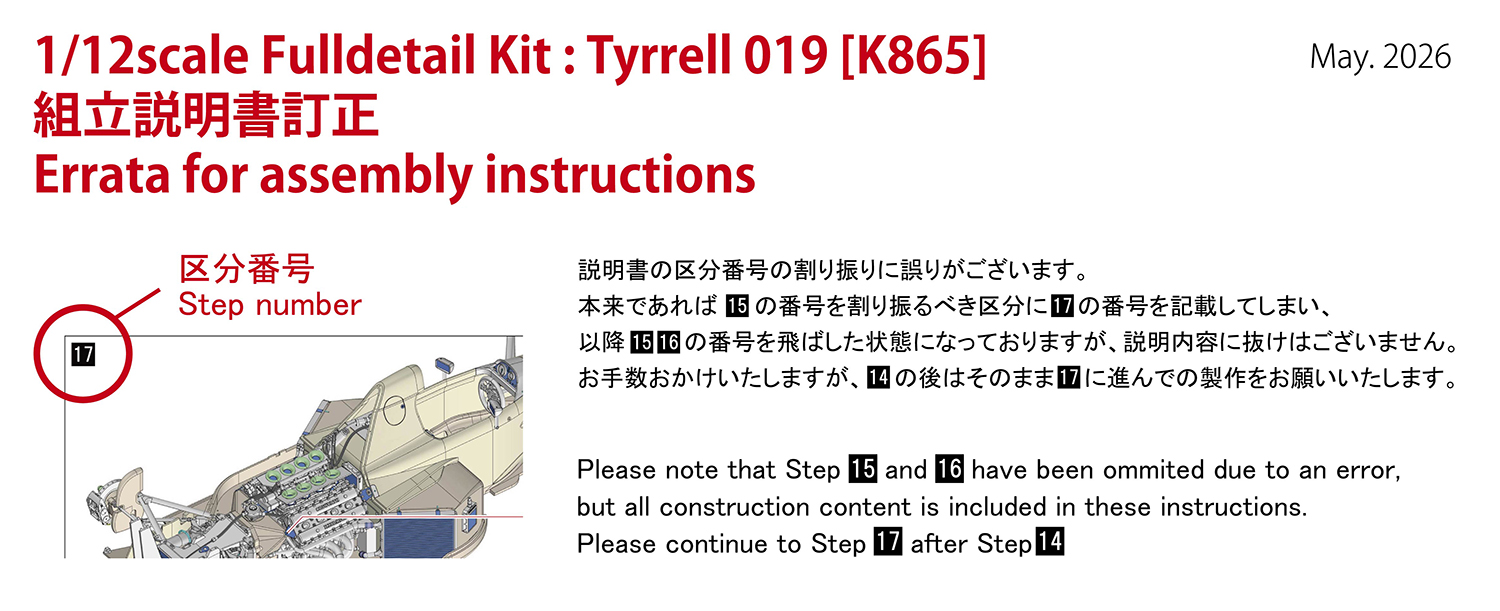
組立説明書に間違いがあることがわかりました。訂正点画像をUPしましたので、お手数ですが組み立ての際ご参照いただきますよう、お願い致します。
We have uploaded new images of the instructions for this kit as multiple errors have been found on the original set of instructions. For customers who have purchased this kit please refer to these new uploaded images for the Corrections to the instructions.
[ Tyrrell 019について -About the Tyrrell 019- ]
サーキットの路面にどれだけ距離を詰められるか。それがF1マシンの主たる議題の時代が長く続きました。より低く。それによって強く路面に押し付ける力、ダウンフォースを得るために-。
Tyrrell 019。その登場は、F1マシンの進化史において、ウイングの登場、グランドエフェクトの利用といった空力面の発明に並ぶ、革新的マシンとしてその名を残すことになるのです。
低く低く、が常識だった1980年代F1フラットボトム規制時代において、マシン前部を持ち上げて高速の気流を下部へ導くことによるダウンフォースの発生、そのことをマシンデザイナーたちは気づきはじめていました。その先鞭としては、ロリー・バーンによる80年代前半のトールマンでの様々なトライ、そしてF3000のいくつかのマシンでの実験的採用、さらに88年、エイドリアン・ニューウェイの手による、わずかに路面から距離を取り始めたノーズを持つ、March 881の登場が挙げられます。それらは、まさに空力革命の胎動といえるものでした。
チーム・ティレルのチーフデザイナーのハーベイ・ポスルスウェイトと空力デザイナーのジャン=クロード・ミジョーは、オーナーのケン・ティレルの指揮の元、この考えを具現化します。それは、F1開発史に新たな1ページが書き加えられた瞬間でした。
1990年、グランプリに登場したTyrrell 019は、高く持ち上げられたノーズ、その左右には下反角の翼 "アンヘドラルウイング"を持つ、誰も見たことのないシルエットを持つマシンでした。重力を拒むかのように高く掲げられたノーズとフロントウイングは、いうならば風という流体を切り裂くのではなく、整流という旋律へと変換する役目を担うものでした。
019は空力面の革新だけでなく、先代マシンである018から採用された左右でショックアブソ-バーとスプリングを共有する”モノショック”をフロントサスペンションに採用。エンジンはフォードDFVの進化型であるDFRを搭載していましたが、そのパワー不足を補うシャシーの性能から、マクラーレンやフェラーリ、ベネトンやウィリアムズといったライバル勢に肉薄する完成度を持っていました。
しかし、この"異形"のマシン019には、そこに生命を吹き込む最後のピースが必要でした。それが、若く荒削りだが速さに対しての強い渇望を秘めた新鋭、ジャン・アレジでした。
019を駆って上位陣に食い込む走りを見せたアレジは、モナコGPで2位に入り、一躍期待の新星として注目を集める存在になります。また、中嶋悟は、このマシンのシェイクダウン前から精力的にテストをこなし、マシンの完成度を上げるのに貢献、レースではイタリアGPと地元日本GPで6位に入る活躍を見せました。
019は、勝利という到達点には届きませんでしたが、F1マシン設計思想の系譜における分岐点となりました。それは、翌年以降ハイノーズが多くのチームに採用され、現代でもF1デザインのトレンドとして残り続けていることが証明しているのです。
Bringing the car down as close to the circuit track has always been the main topic of interest in Formula 1 - the closer the car runs to the ground a stronger downforce would be generated. The Tyrrell 019 was a machine that brought advancement to the development of aerodynamics to take advantage of such ground effects.
In the 1980s, due to regulations of flat bottom cars, designers realized that downforce could be achieved by lifting the front of the car to generate a high speed airflow through the base of the car. Various pioneers lead the development to take advantage of such aerodynamics: Designer Rory Byrne ran various trials during his time with Toleman motorsports in the early 80s, and various machine designs were tested in F3000. Adrian Newey would design the March 881 in 1988, which had a nose that was only slight off the ground. Under the direction of team owner Ken Tyrrell, chief designer Harvey Postlethwaite and aerodynamics designer Jean-Claude Migeot, Team Tyrrell would further advance the aerodynamics revolution with their new F1 car for the 1990 season.
The Tyrrell 019 debuted in 1990 with a design form never seen until then - a high nose and anhedral front wing design. With a high nose and wing places far from the ground, it acted to redirect airflow instead of cutting through it. The front suspension used a “mono shock” carried over from the previous 018, in which a single spring shock absorber is shared between both suspension arms. The engine was a Ford DFR engine, an evolution of the DFV. It was not the strongest engine at the time, and even paired with a revolutionary chassis the car preformed one step behind the other rival teams of McLaren, Ferrari, Benetton and Williams.
The final piece needed to breath life into such an unconventional machine was the talented newcomer Jean Alesi. Under his hands the 019 was able to go head to head against the competition and even managed to finish 2nd place during the Monaco GP, drawing attention to the young driver at the time. His teammate Nakajima Satoru also contributed to the machine's refinement during tests before the shakedown, and also managed to take 6th place with the car at both the Italian GP and his home race at Japanese GP.
While the 019 wasn't the forerunner on the track, it was one in regards to design philosophy for F1. The influence would be hard to ignore, as many teams would implement the design for the following year, and the design still continues to be a trend in F1 till this day.
[ キット概要 -Kit Details- ]
■レジン、ホワイトメタル、エッチング、シルクスクリーン印刷デカール、ゴムパーツ、アルミ挽き物、各種コード類等をふんだんに使用したマルチマテリアル・キットです。
■J.アレジが2位表彰台を獲得した1990年モナコGP仕様と、中嶋悟が地元日本で6位入賞を果たした日本GP仕様の選択式。
■ホイールとホイールロックナットはアルミ挽き物製でアルマイトカラー加工済。他にもエンジンファンネル、ホイールシャフトもアルミ挽き物製。
■各種パイピング、チューブ等、マルチマテリアルでパーツ化し、リアルさを追求しました。
■ボディカウルとノーズは車体から脱着が可能。完成後も内部構造を見ることができます。
■スポンサーロゴデカールの他に、ウイング・モノコック等に使用するカーボンデカールを同梱。デカールはカルトグラフ製。
■ゴム製タイヤはメーカーロゴ印刷済。
- a full detailed, multi-material kit featuring white metal, resin, etching, turned parts, rubber tires, silk screen decals and various cords allowing for maximum representation of the original vehicle.
- Choose between the 1990 Monaco Grand Prix specification, where J. Alesi finished second place, and the 1990 Japanese Grand Prix specification, where S. Nakajima finished sixth on his home circuit.
- aluminum turned wheels and lock nut come dyed in color by anodizing. Other aluminum turned parts include engine funnel and wheel shaft.
- body cowl and nose can be removed after completion, allowing for full view of the detailed interior.
- decals mainly provided by Cartograf, including sponsor logos and carbon fiber patterns for areas around wing/monocoque.
- tires from pre-printed with maker logo.
[ パーツ・リスト -Parts List- ]
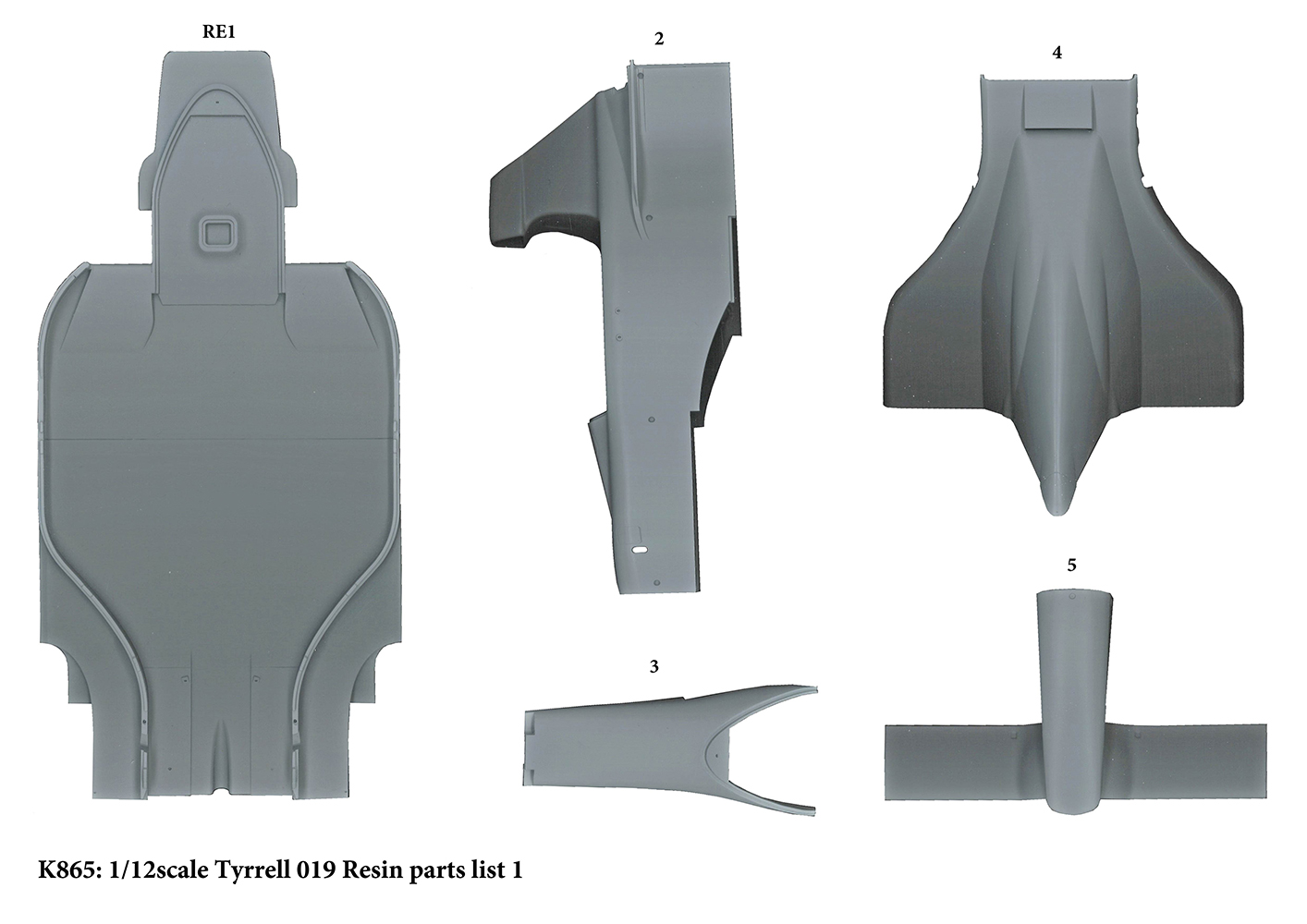
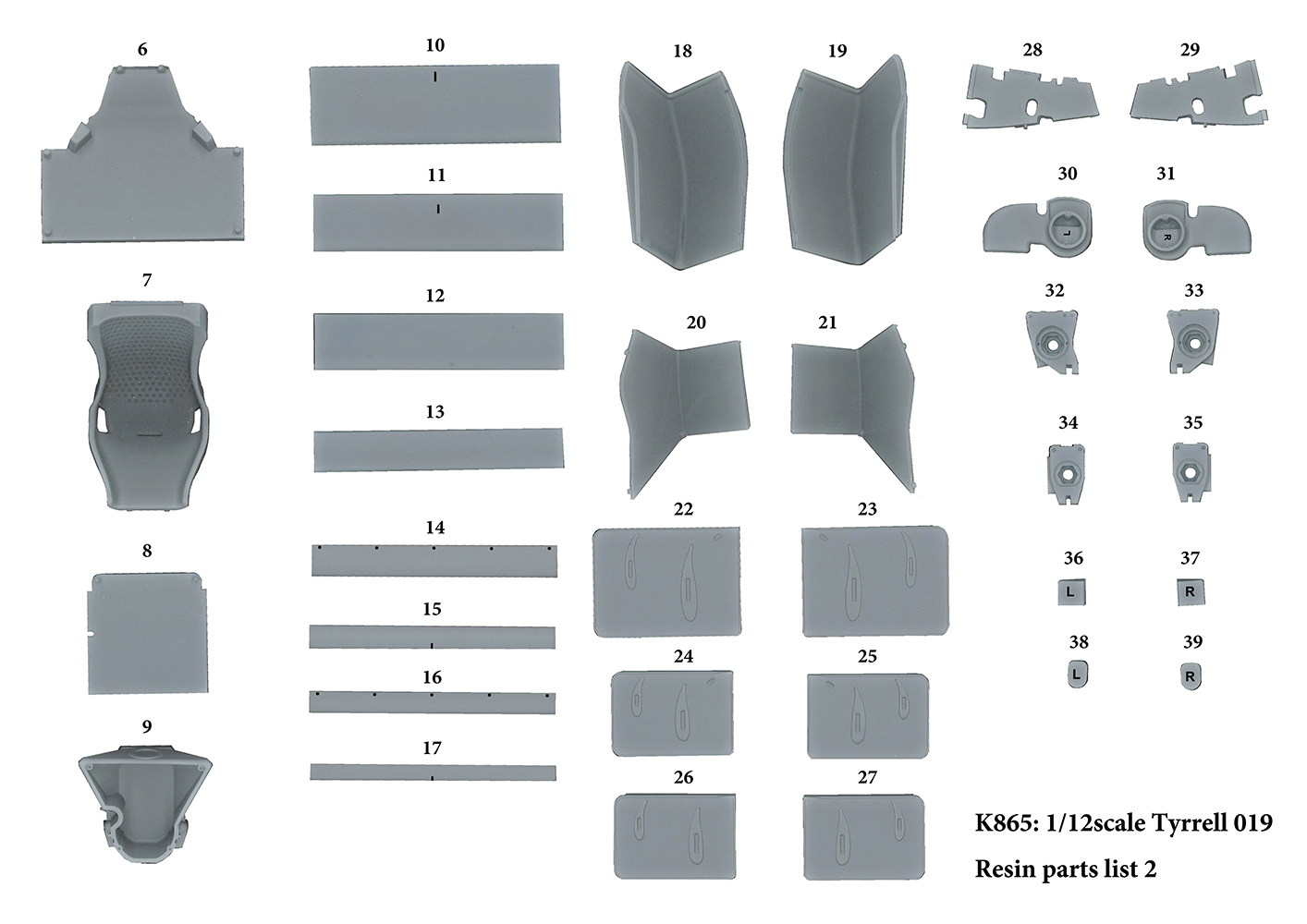
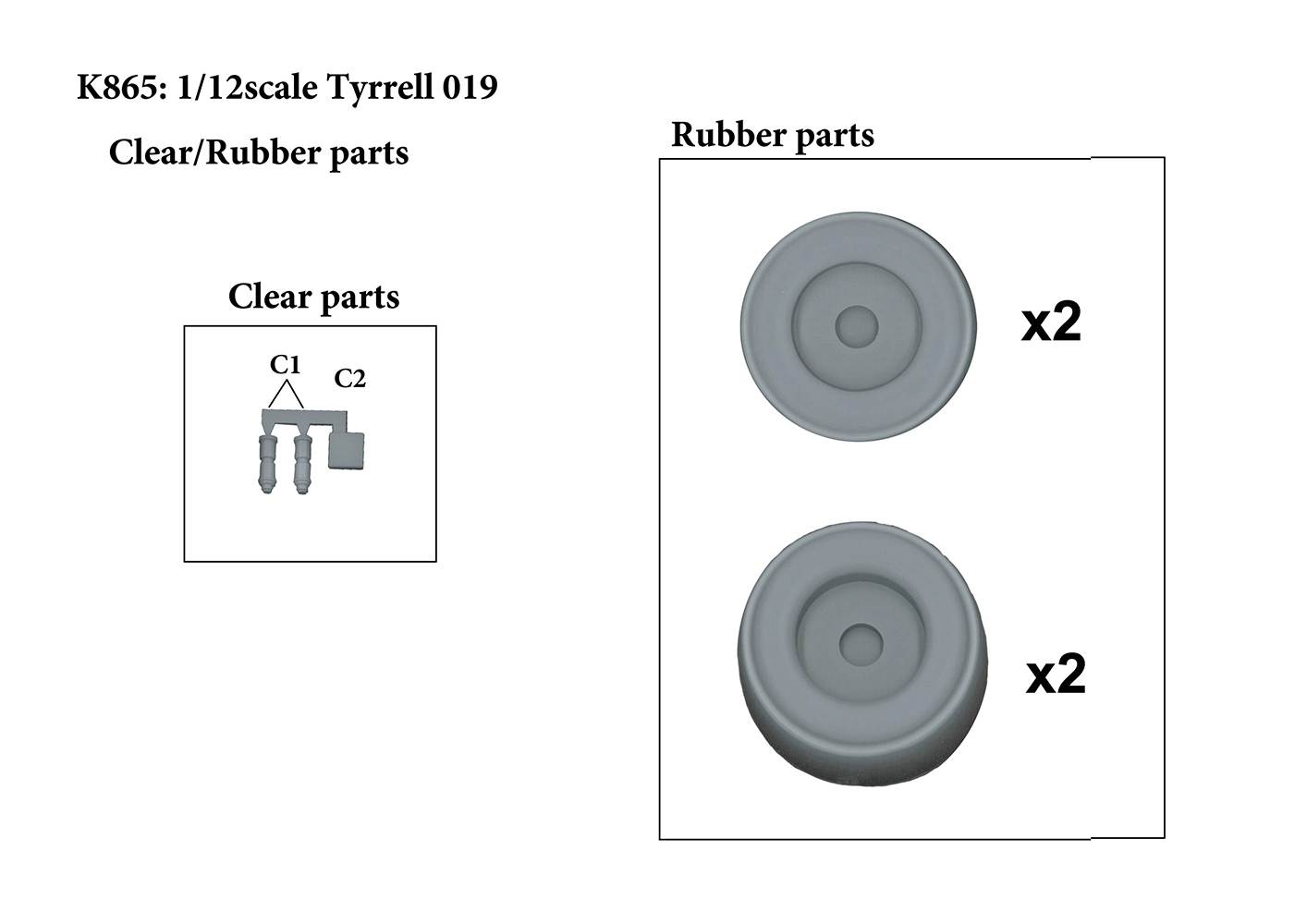
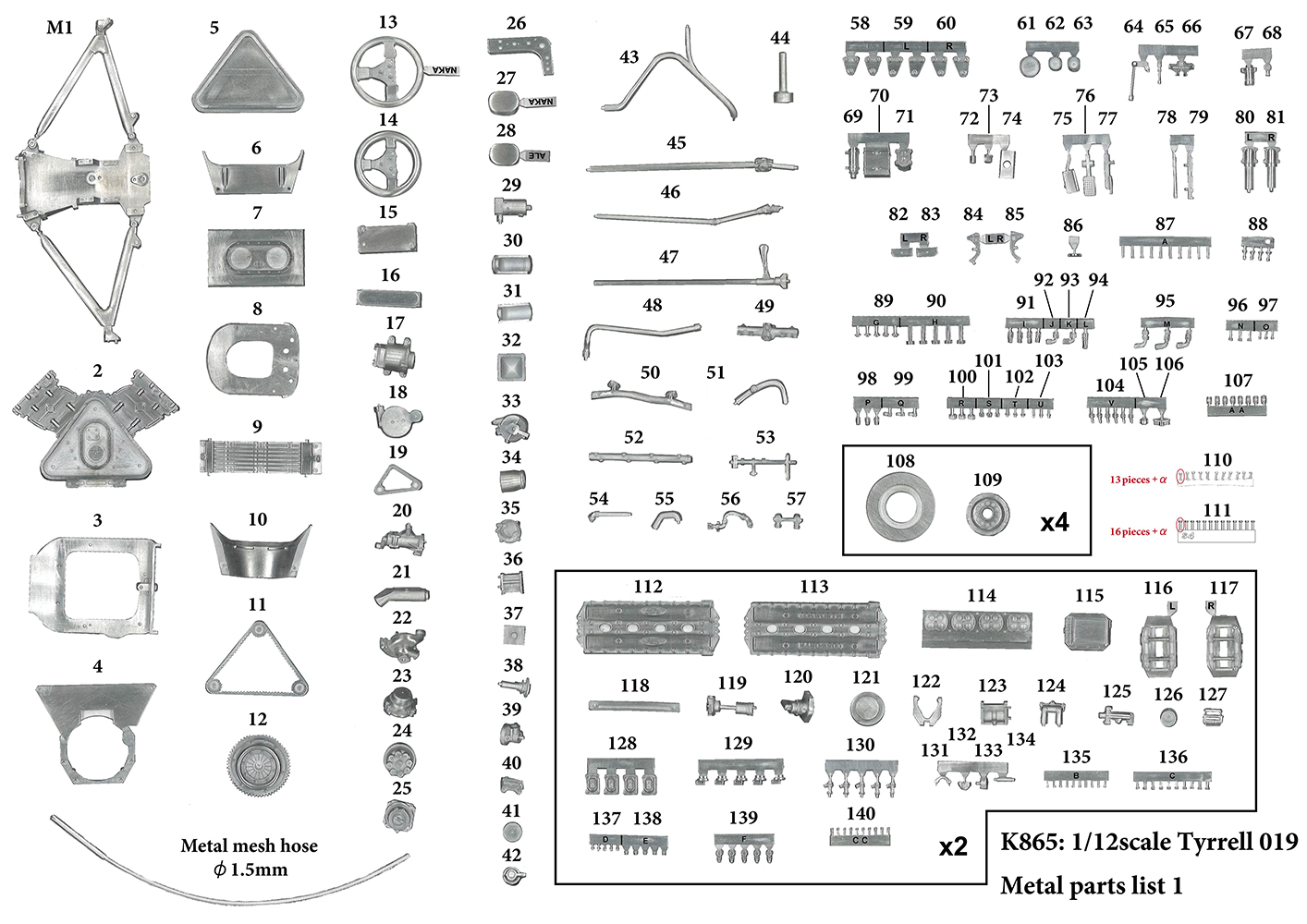
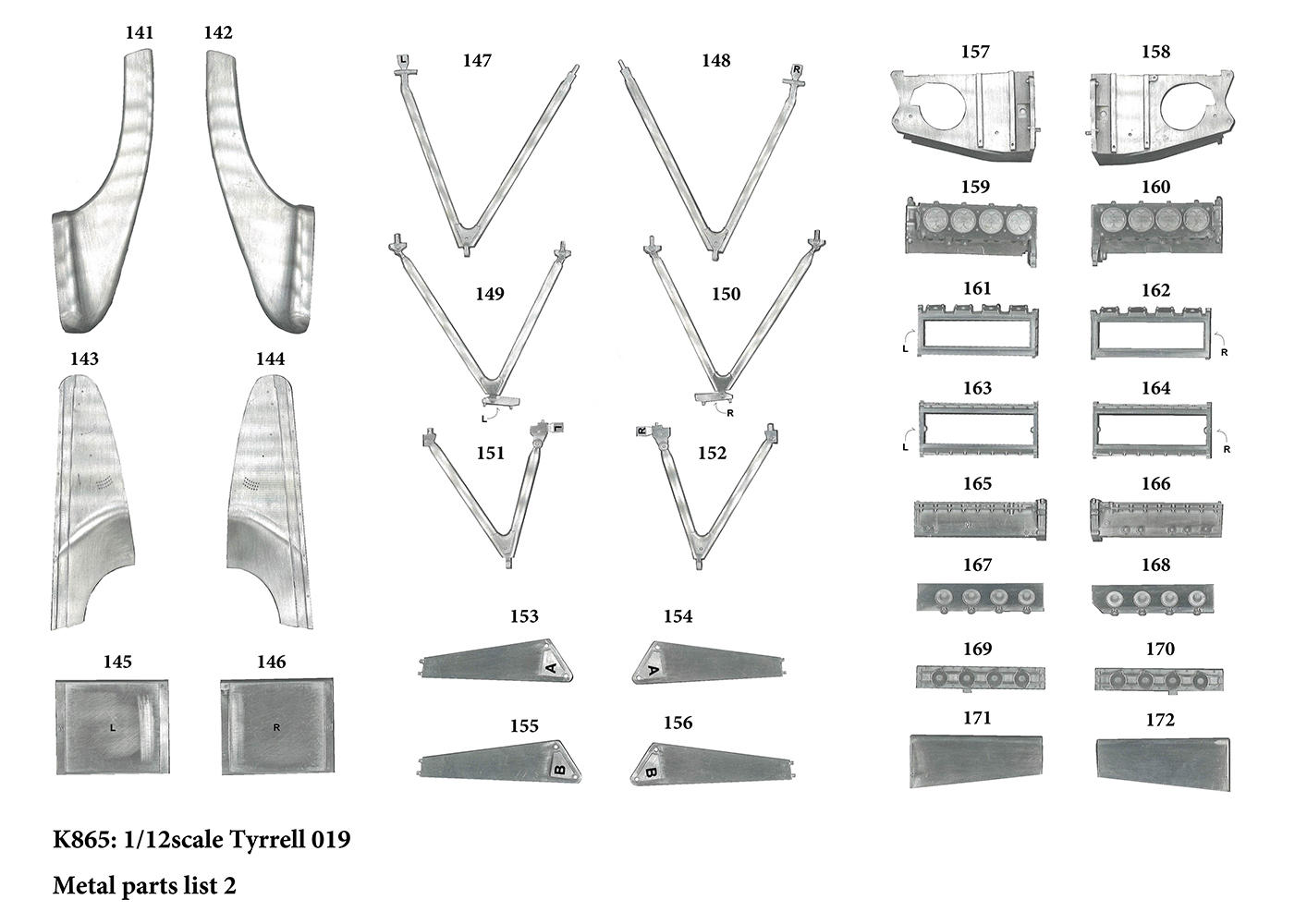
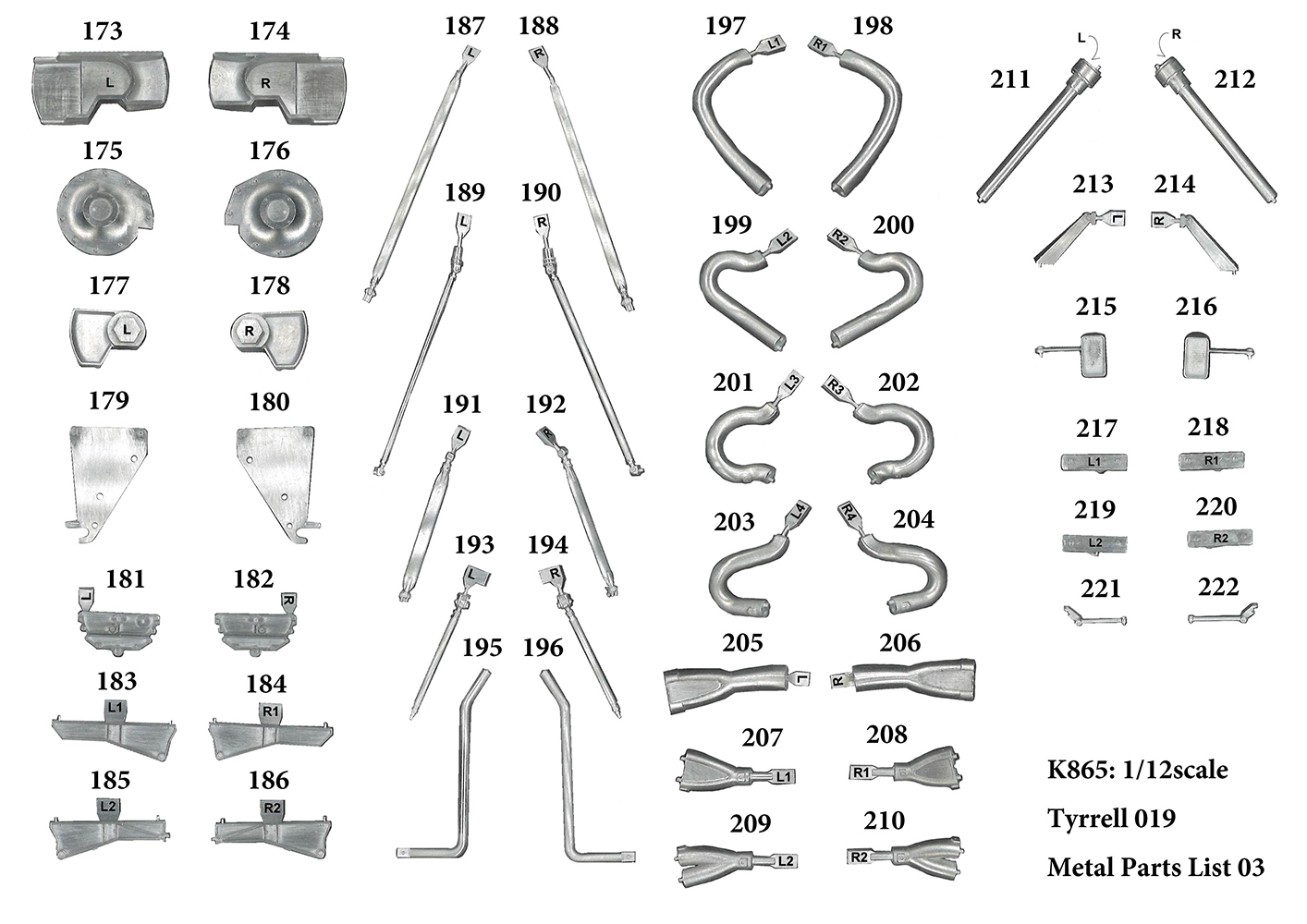
●K865 - 1/12scale Fulldetail Kit : Tyrrell 019
1990 Rd.4 Monaco GP #3 S.Nakajima / #4 J.Alesi
1990 Rd.15 Japanese GP #3 S.Nakajima / #4 J.Alesi
[ 2026年5月発売 / May 2026 released ]